
Article
What to Look for in an EV Charging Payment Terminal
As electric vehicle (EV) adoption accelerates, charging infrastructure is expanding rapidly across public, commercial, and fleet environments. While charging speed and availability are critical, the EV charging payment experience is becoming a key differentiator.
Drivers expect the same convenience they get in retail or fueling: fast, secure, and flexible payments. Choosing the right EV charging payment terminal is essential for improving user satisfaction, reducing abandonment, and maximizing revenue.
1. Omnichannel Payment Support for Maximum Accessibility
Delivering omnichannel payments requires more than just enabling multiple payment methods. It involves a coordinated ecosystem of hardware, software integration, and financial services working together to create a consistent and reliable experience across all touchpoints.
A modern EV charger payment solution must support a wide range of payment methods to meet diverse user preferences:
- EMV contact (chip) and contactless payments
- Mobile wallets like Apple Pay and Google Pay
- Fleet cards and loyalty programs
- App-based and account-based payments
Omnichannel payment support is increasingly required by government regulations in many regions to ensure accessibility and transparency. More importantly, it reduces friction at the charger, helping operators lower abandonment rates and increase successful transactions.
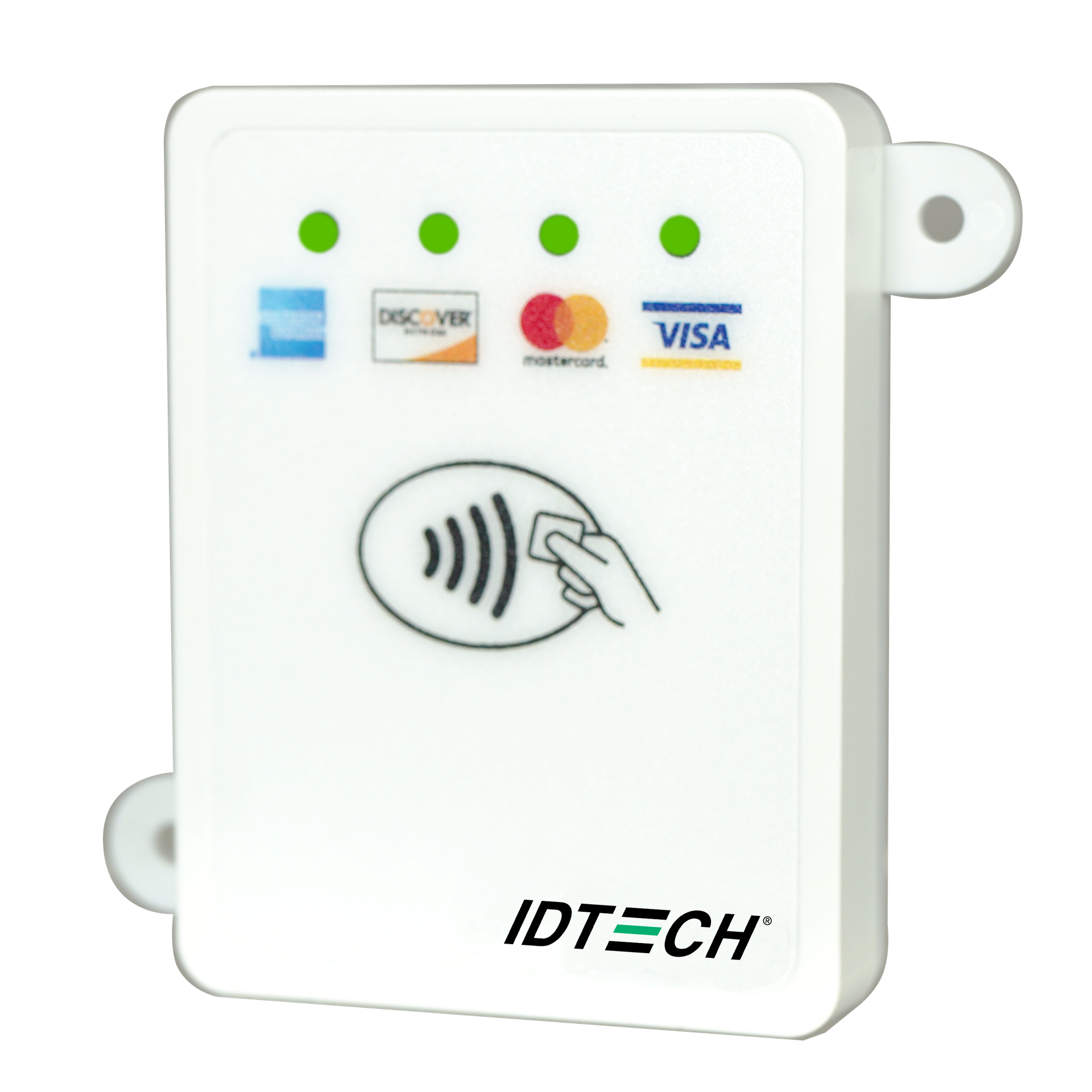
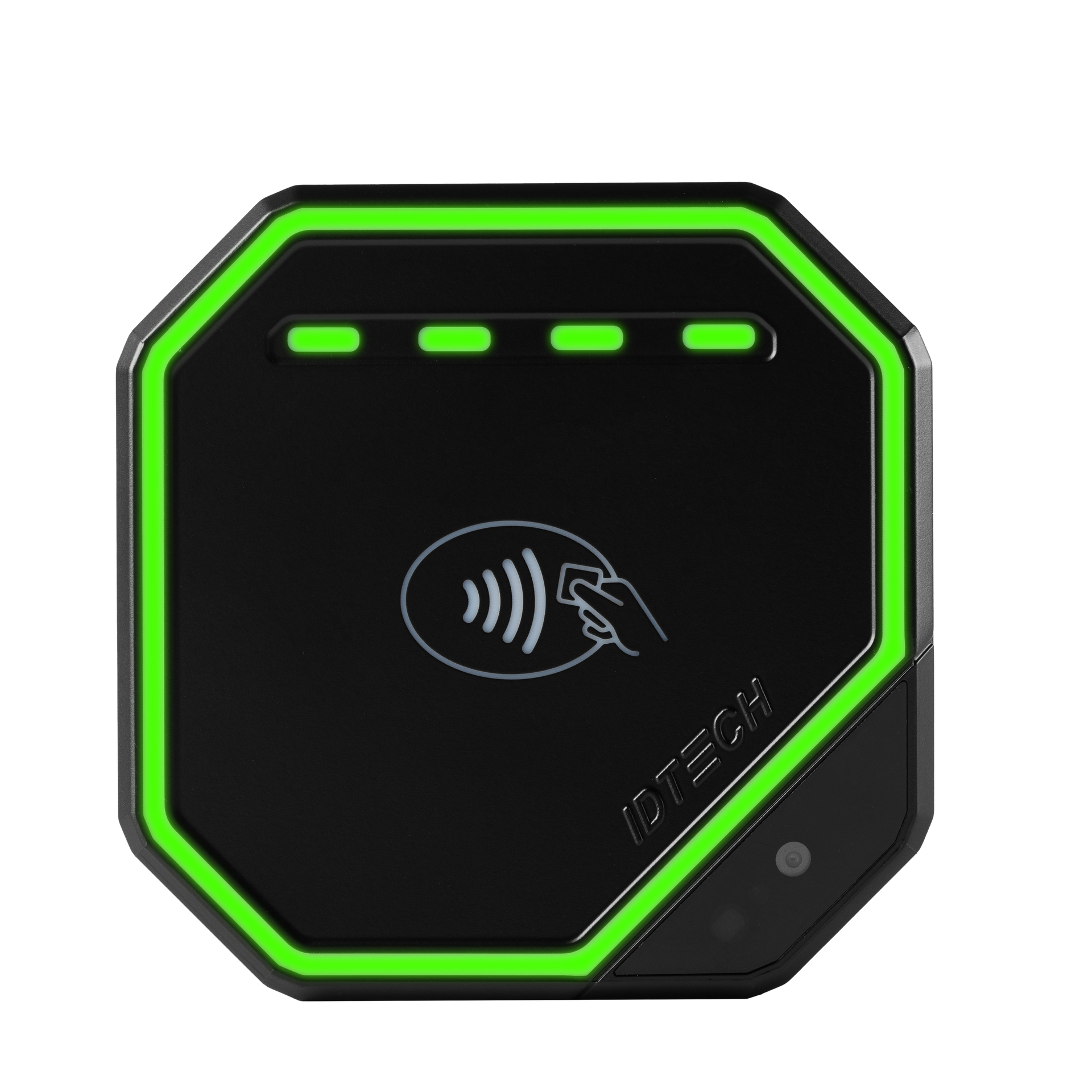
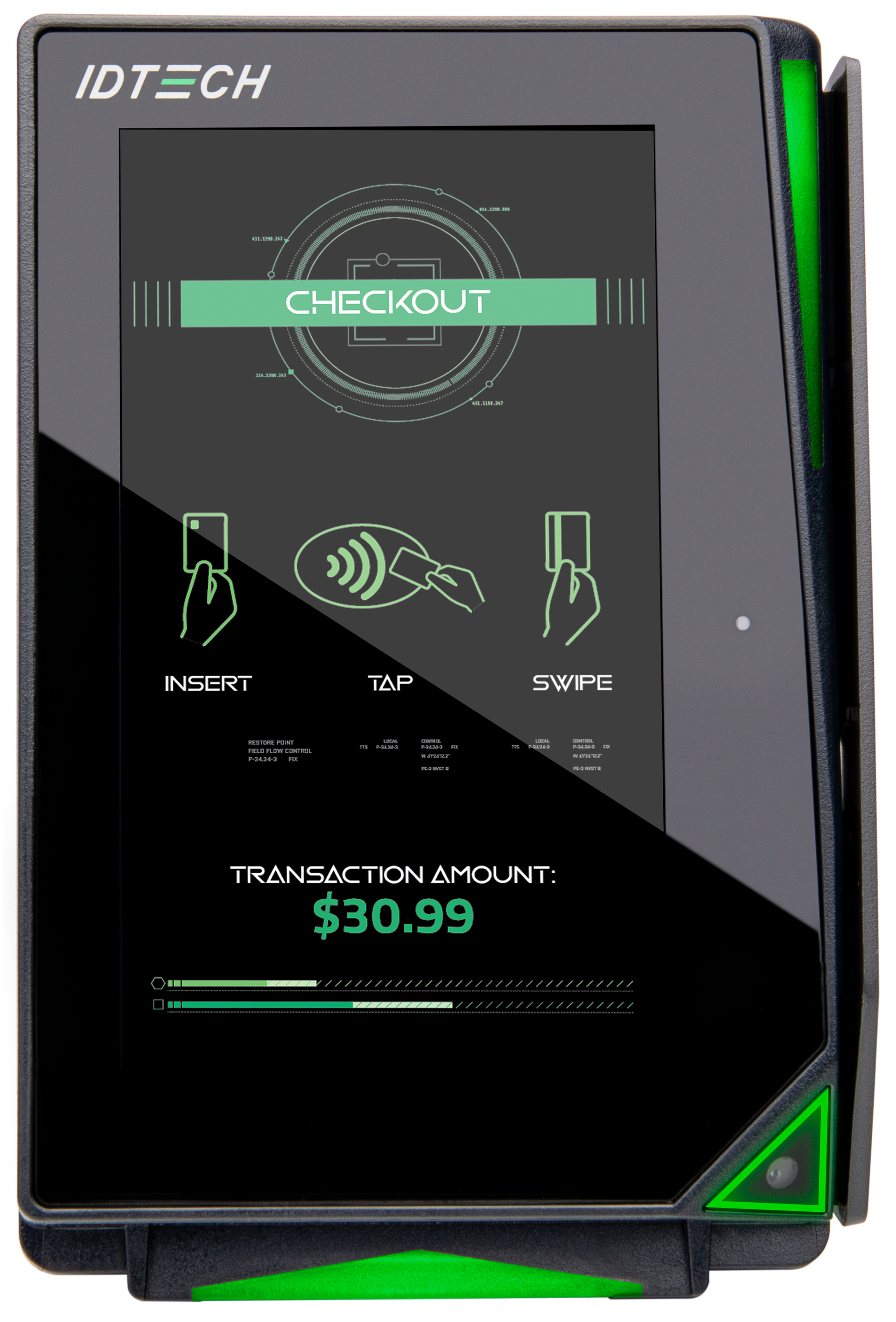
Payment devices such as the VP3300 EXT, VP7200, and VP6825 support card-present and tap-to-pay methods in unattended environments. Built to work as an EV charging card reader, they enable contactless EV charging and NFC EV payments for an inclusive, reliable charging experience.
2. Outdoor Payment Terminal Durability & Temperature Tolerance
Unlike indoor POS systems, EV charging stations operate in demanding outdoor conditions. A reliable outdoor payment terminal for EV charging must be built to handle environmental stress:
- High IP ratings for water and dust resistance
- Strong IK ratings for impact protection
- Screens with high display readability in intense ambient light
- Resistance to heat generated by high-power chargers
Devices such as VP7200, VP6825, and Kiosk V are engineered for rugged outdoor deployment. Their durability ensures consistent uptime, reduces maintenance costs, and supports long-term operational reliability. In addition, the VP3300 EXT is specifically designed for embedded applications within EV chargers, featuring an extended operating temperature range that allows it to perform reliably even in high-heat environments generated by charging equipment.
Together, these capabilities help operators reduce maintenance costs, minimize downtime, and ensure a dependable payment experience in all weather conditions.
3. Easy Integration with Charging Systems (OCPP & CPMS Compatibility)
One of the most important factors when selecting an EV charger payment solution is how easily it integrates with your existing infrastructure. Payment terminals should support industry-standard protocols such as OCPP (Open Charge Point Protocol), ensuring reliable communication with charging point management systems (CPMS) and enabling scalable, future-ready deployments.
To reduce complexity and ensure scalability, a middleware solution like a Payment Application Engine (PAE) simplifies the integration process. By providing a pre-certified payment framework, PAE eliminates the need for complex EMV Level 3 certification, lowers development costs, and accelerates deployment timelines. In addition, our semi-integration solution is certified with multiple payment processors, increasing flexibility and further streamlining payment integration.
As EV adoption grows, operators need scalable payment solutions that can be deployed quickly across multiple locations. Pre-certified payment components help reduce development and certification timelines, allowing faster rollout of charging stations.
4. Secure Payment Processing for EV Charging
Security remains a critical requirement for any EV charging payment terminal, especially for unattended EV payments. Technologies such as PCI-validated point-to-point encryption (P2PE), tokenization, and EMV certification protect sensitive cardholder data throughout the transaction lifecycle. Combined with tamper-resistant hardware, EMV EV charging helps reduce fraud risk and simplify PCI compliance. Equally important is adopting an all-in-one payment solution that combines hardware, software, and merchant services into a unified ecosystem. This approach eliminates the need to manage multiple vendors, reduces integration friction, and streamlines ongoing operations. With integrated merchant services offering competitive pricing plans, operators can also lower payment processing costs while maintaining high performance and reliability.
5. Reliable Technical Support & End-to-End Payment Solutions
Deploying an EV charger payment solution involves more than just hardware; it requires coordination across software, payment processing, and ongoing operations. Choosing a provider that offers an end-to-end ecosystem can significantly reduce complexity.
With integrated hardware, software, and merchant services, operators benefit from a streamlined deployment process and a single point of contact for support. Experienced technical teams can assist with integration, onboarding, and troubleshooting, ensuring that your electric vehicle payment system runs smoothly as your network grows.
Future-Proof Your EV Charging Payment Experience
As EV infrastructure continues to evolve, payment expectations will continue to rise. Investing in a flexible, secure, and scalable EV charging payment terminal ensures that your business is ready to meet both current and future demands.
With solutions like the VP3300 EXT, VP7200, VP6825, Kiosk V, and AP6800, operators can deliver reliable, future-ready payment experiences, from an EV payment kiosk to embedded card readers, across their EV charging networks.
Payment Terminals Built for EV Charging
Talk to an EV Charging Payment Expert!
Get In Touch
Tell us about your environment and our team will follow up.